

How Does a Calcium Alginate Dressing Sheet Work?
The core performance of a Calcium Alginate Dressing Sheet lies in its unique gel-forming technology.
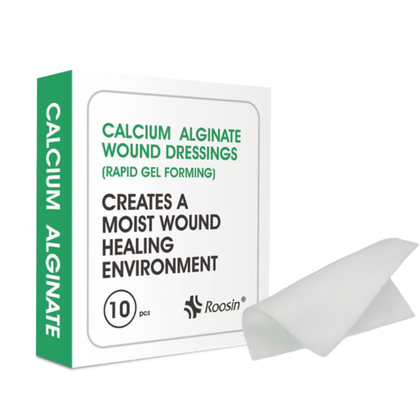
When the alginate fibers of the sheet come into contact with wound exudate, a natural chemical exchange occurs. The sodium ions in the wound fluid swap with the calcium ions in the dressing. This reaction transforms the dry, non-woven Calcium Alginate Dressing Sheet into a soft, cohesive hydrophilic gel.
This gel-forming process delivers three critical clinical benefits:
- Creates a Moist Healing Environment: The gel locks in moisture, which is proven to accelerate cell regeneration and tissue repair.
- Non-Adherent Removal: Because it turns into a gel, the dressing does not adhere to the delicate, newly formed tissue in the wound bed, ensuring painless removal.
- Natural Hemostasis: The release of calcium ions helps activate platelets, providing a gentle hemostatic (bleeding control) effect that is ideal for freshly debrided or lightly bleeding wounds.
Key Clinical Indications
Thanks to its high absorbency and structural integrity, a Calcium Alginate Dressing Sheet is highly recommended for the following wound types:
- Moderate to Heavily Exuding Wounds: Effectively manages heavy fluid flow, reducing the risk of skin maceration around the wound.
- Chronic Ulcers: Highly effective for pressure ulcers (bedsores), diabetic foot ulcers, and venous/arterial leg ulcers.
- Surgical and Trauma Wounds: Provides sterile protection for donor sites, skin grafts, and post-surgical incisions.
- Cavity Wounds: Highly conformable ropes and sheets can fill deep wound cavities, ensuring healing from the inside out.


Professional Application Guide
To ensure optimal performance and patient comfort, follow these clinical application steps:
- Cleanse and Prepare: Thoroughly clean the wound and surrounding skin with sterile saline or water, then gently pat the surrounding area dry.
- Apply the Sheet: Place the Calcium Alginate Dressing Sheet directly onto the wound bed. (If applying to a lightly exuding wound, slightly moisten the dressing with sterile saline first to avoid premature drying).
- Add a Secondary Dressing: Alginate dressings require a secondary protective layer (such as a foam dressing or film) to secure them in place and lock in the gel.
- Change Frequency: Change the dressing daily for heavily draining wounds. As exudate levels decrease, change frequency can be reduced to every 3 days, or as directed by a healthcare professional.
Technical Specifications & OEM Customization
We manufacture and supply medical-grade alginate dressings in a variety of configurations to meet diverse clinical demands:
- CAD0001: 5cm × 5cm (10 per box)
- CAD0002: 10cm × 10cm (10 per box)
- CAD0003: 10cm × 12.5cm (10 per box)
- CAD0004: 10cm × 20cm (5 per box)
- High-Capacity Cavity Options: 2cm × 30cm and 2g × 30cm rope formats for deep wound packing.

We offer comprehensive OEM and customized packaging services for global distributors, healthcare brands, and medical supply chains, ensuring compliance with international quality standards.
Hot Tags: Calcium Alginate Dressing Sheet, China Calcium Alginate Dressing Sheet suppliers, manufacturers, factory